Mu Cang Chai sits in a remote district of Yen Bai province, roughly 300 kilometers northwest of Hanoi, and it's home to some of the most photographed rice terraces in Vietnam. Unlike Sapa, which has grown into a full tourist town, Mu Cang Chai remains largely agricultural — the terraces are still actively farmed by local H'mong communities, not maintained as a backdrop for visitors. That authenticity is exactly what draws photographers and travelers willing to make the longer trip.
Three valleys around Mu Cang Chai — La Pan Tan, Che Cu Nha, and De Xu Phinh — are protected as a National Special Landscape, largely because their terraced fields form some of the most dramatic, layered patterns anywhere in Vietnam. The scale is the difference-maker: entire mountainsides are carved into hundreds of curving steps, visible from single viewpoints in a way that's harder to find even in Sapa's terraces.
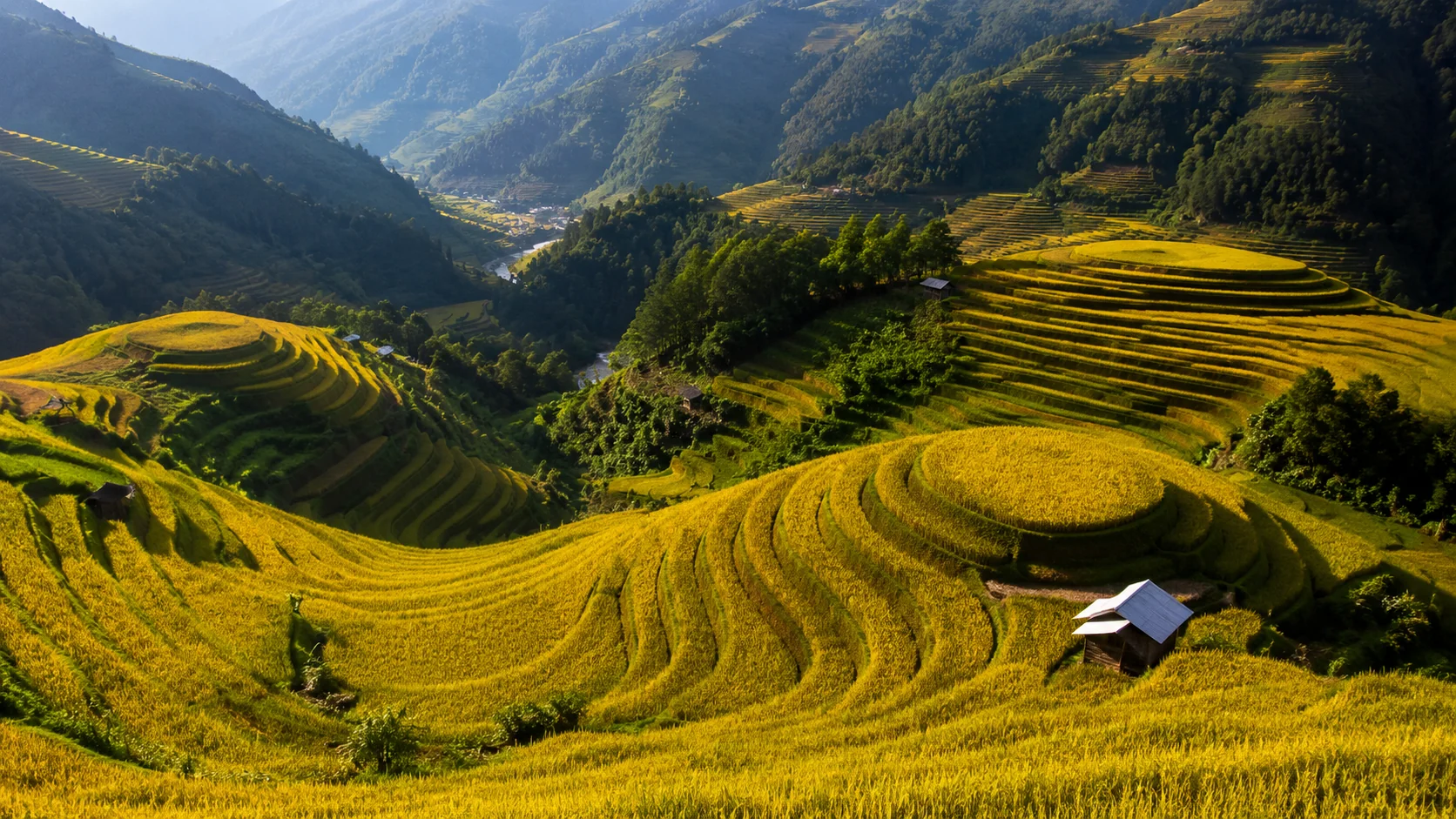
Because the harvest window is narrow — roughly two to three weeks — it's worth confirming timing close to travel dates, since the exact peak shifts slightly year to year depending on weather.
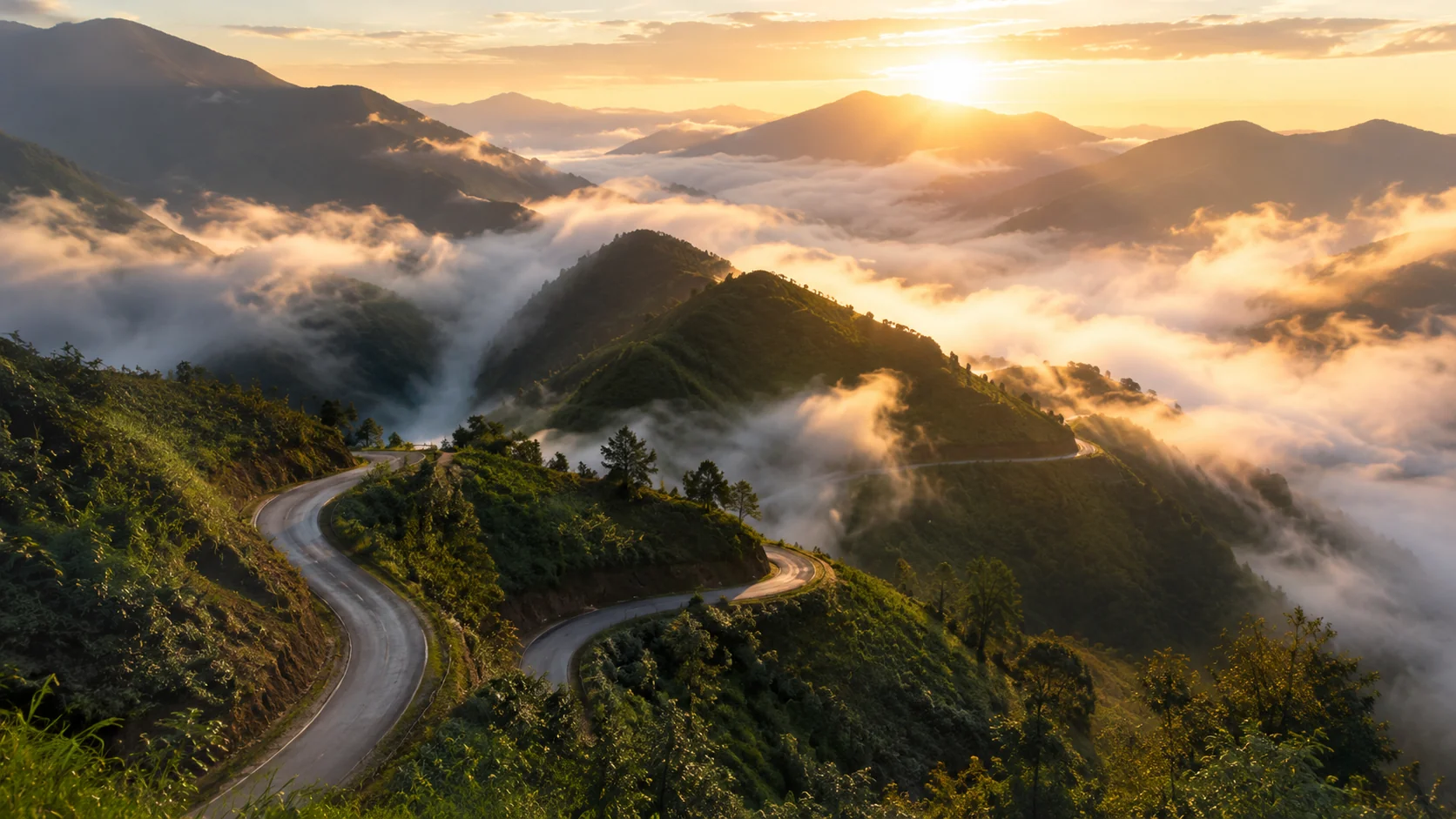
The most common route is a 6–7 hour drive or bus from Hanoi, often broken up with a stop in Nghia Lo or Tu Le. Travelers already in Sapa can also reach Mu Cang Chai via Khau Pha Pass, a scenic but winding mountain route that takes around 3–4 hours. There's no train or airport directly serving the district, so private car, motorbike, or a scheduled bus/sleeper bus from Hanoi are the practical options.
Sapa offers easier access, more infrastructure, and trekking routes suited to a wider range of fitness levels. Mu Cang Chai trades convenience for scale and authenticity — larger, less-visited terraces and fewer tourists, but a longer journey and more basic accommodation. Some travelers combine both, using Khau Pha Pass to link the two rather than choosing one over the other.
If you're deciding between the two, our Sapa motorbike tour guide covers the more accessible option in detail.
When exactly do the rice terraces turn gold in Mu Cang Chai?
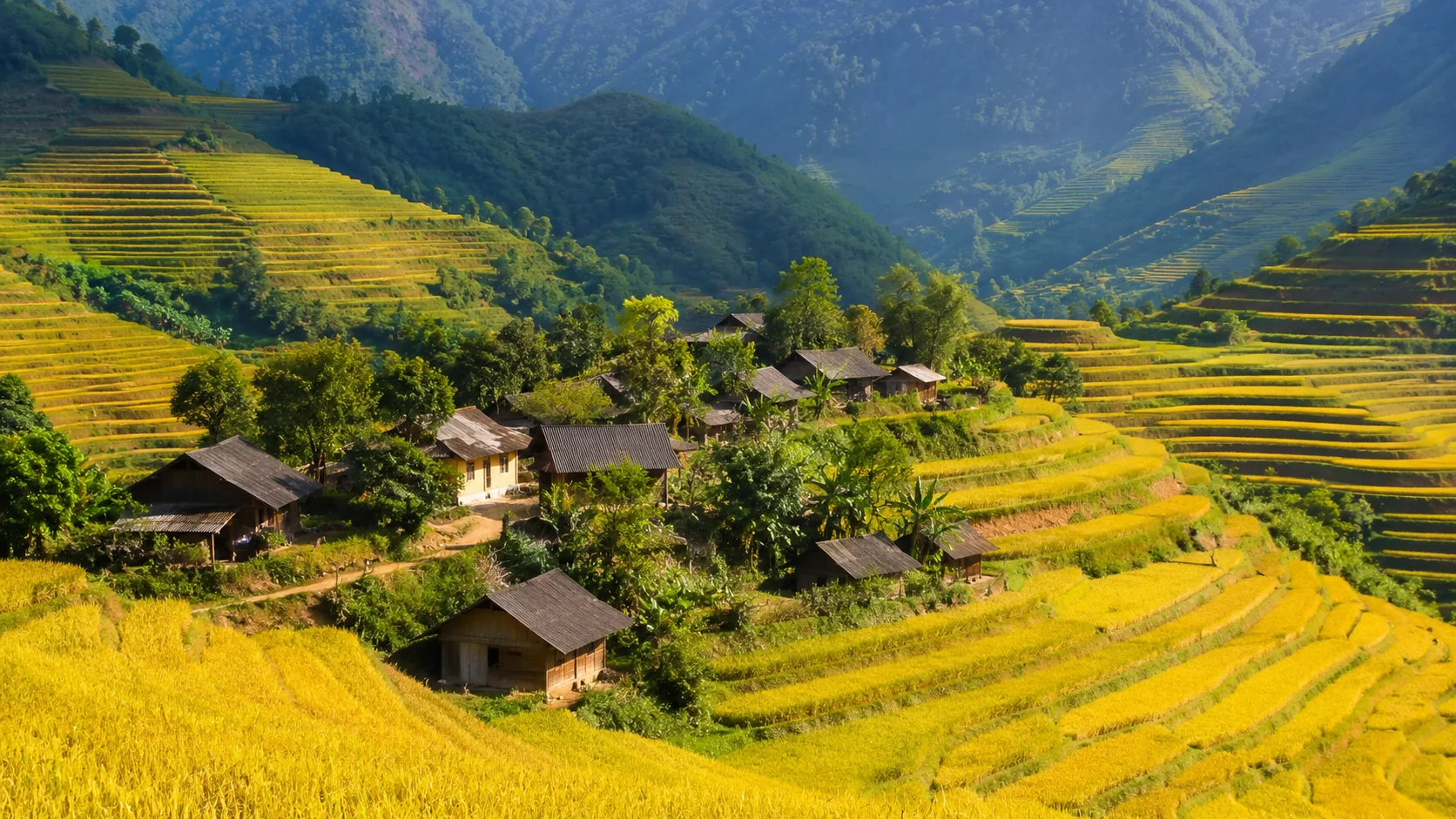
The peak harvest color typically falls between mid-September and early October, though the exact window shifts slightly each year depending on rainfall and planting schedules. Checking closer to your travel dates is worth it if the timing is your main priority.
Is Mu Cang Chai worth visiting if you've already been to Sapa?
Yes, for most travelers — the terraces are larger in scale and far less crowded than Sapa's, and the district retains a more agricultural, less touristed feel. The tradeoff is a longer journey and more basic infrastructure.
How do you get from Hanoi to Mu Cang Chai?
Most travelers take a 6–7 hour bus or private car from Hanoi, often with a stop in Nghia Lo or Tu Le along the way. There's no direct train or airport serving the district.
Can Mu Cang Chai and Sapa be combined in one trip?
Yes, the two are commonly linked via Khau Pha Pass, a scenic mountain route of around 3–4 hours. This lets travelers see both the terraces and Sapa's trekking routes without backtracking through Hanoi.
What is the water season in Mu Cang Chai?
Around May to June, fields are flooded ahead of rice planting, creating a mirror-like reflection of the sky across the terraces. It's a completely different look from the golden harvest season but equally popular with photographers.
Mu Cang Chai rewards travelers willing to trade convenience for scale — the terraces here are bigger, less crowded, and more agriculturally authentic than almost anywhere else in northern Vietnam. Timing the trip to the narrow harvest window in September makes the biggest difference to what you'll actually see, more than any other single planning decision.
Send us your travel dates and we'll help you time it to peak terrace color and plan the route from Hanoi or Sapa.
| Chat on Zalo | Chat on WhatsApp |
Hotline / Zalo / WhatsApp: +84 913 833 980

Vietnam Family Holiday from North to South 16 days

Best A Luoi Tour Package from Hue – Authentic Highland Experience

Best Vietnam Family Tour with Kids – 14 Days / 13 Nights


Vietnam Cultural Journey 10 Days from Ho Chi Minh City
Vietnam Classic 7 Days Tour – Best Highlights from North to South