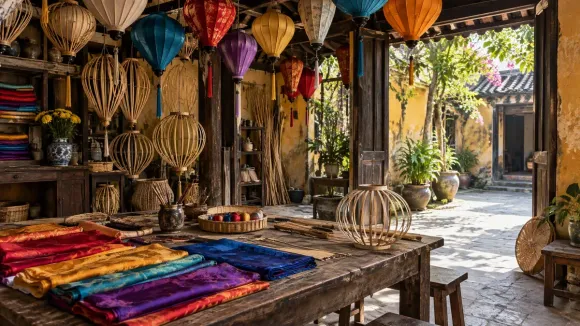
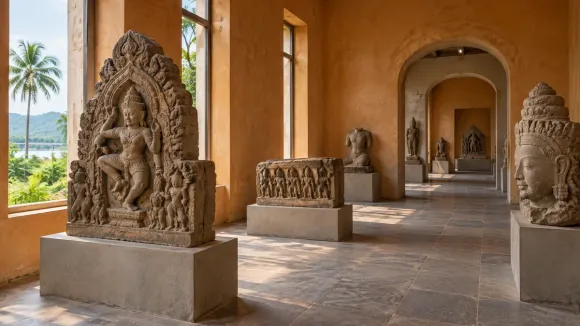
Explore Hue garden houses with An Hien, timber architecture and a relaxed half-day route, plus visiting etiquette and booking tips for your Vietnam holiday.
Beyond Hue's monumental gates, a shaded garden and a timber doorway reveal a quieter way to understand the former imperial capital.
Build this slower experience into a private Hue city tour, or combine it with other destinations through our Vietnam tour packages. For context, the history of Vietnam's former imperial capital and the riverside setting of Thien Mu Pagoda help explain the landscape around these homes.
A palace tells you how a dynasty presented itself. A garden house asks a different question: how did people arrange everyday life, receive guests and make room for their ancestors? Hue garden houses offer this more intimate perspective, pairing timber architecture with enclosed greenery rather than grand ceremonial courtyards.
They suit travellers who enjoy noticing details: a doorway screened from the street, roof beams darkened by age, and a pond that changes the feeling of the space around it. Instead of treating them as another stop in a crowded sightseeing checklist, allow time to look, listen and ask questions.
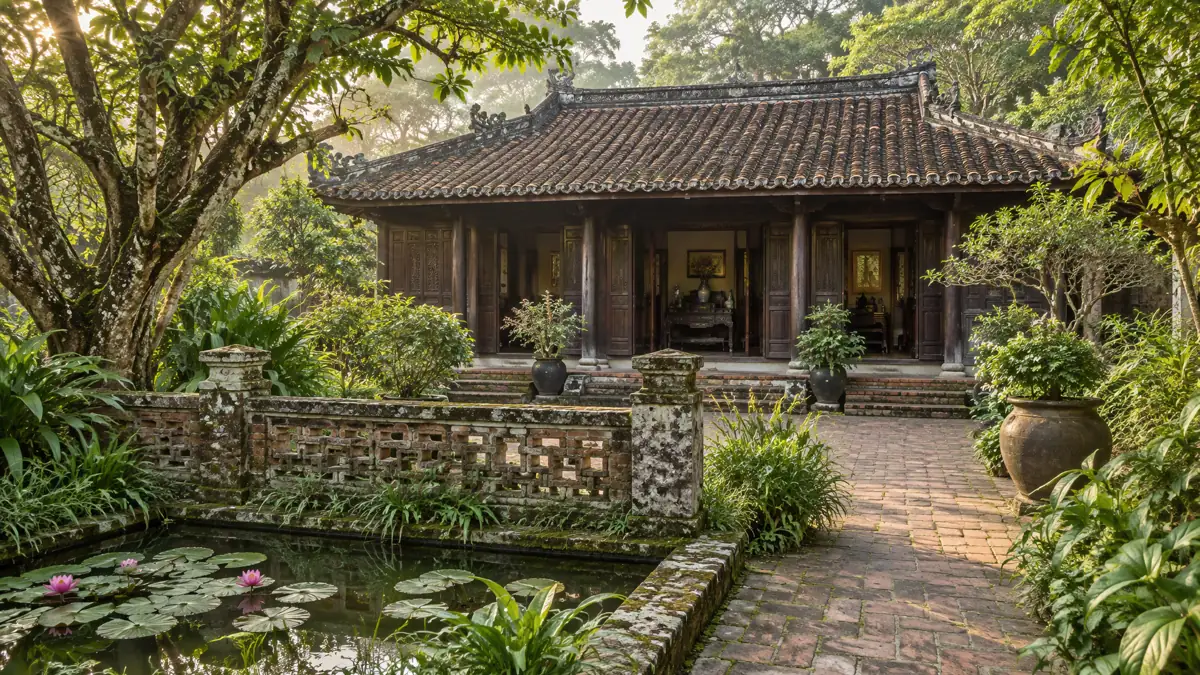
The house and garden form a single composition. The Vietnamese expression nha vuon refers to a garden house; nha ruong describes a traditional timber-framed house associated with Hue's architectural heritage. These ideas overlap, but they are not interchangeable: one describes the setting, the other the building tradition.
Look for the relationship between the entrance, a screen wall, water and the main residence. At An Hien, the local Hue Discovery guide describes a shaded approach, a screen, a pond and a house with three compartments and two wings. The interesting part is not simply identifying each feature, but understanding how they work together.
A guide can explain the cultural significance of orientation and feng shui without presenting them as scientific guarantees. Likewise, family worship spaces deserve more than a quick photograph. They help explain why a historic residence can carry both domestic and ceremonial meaning.
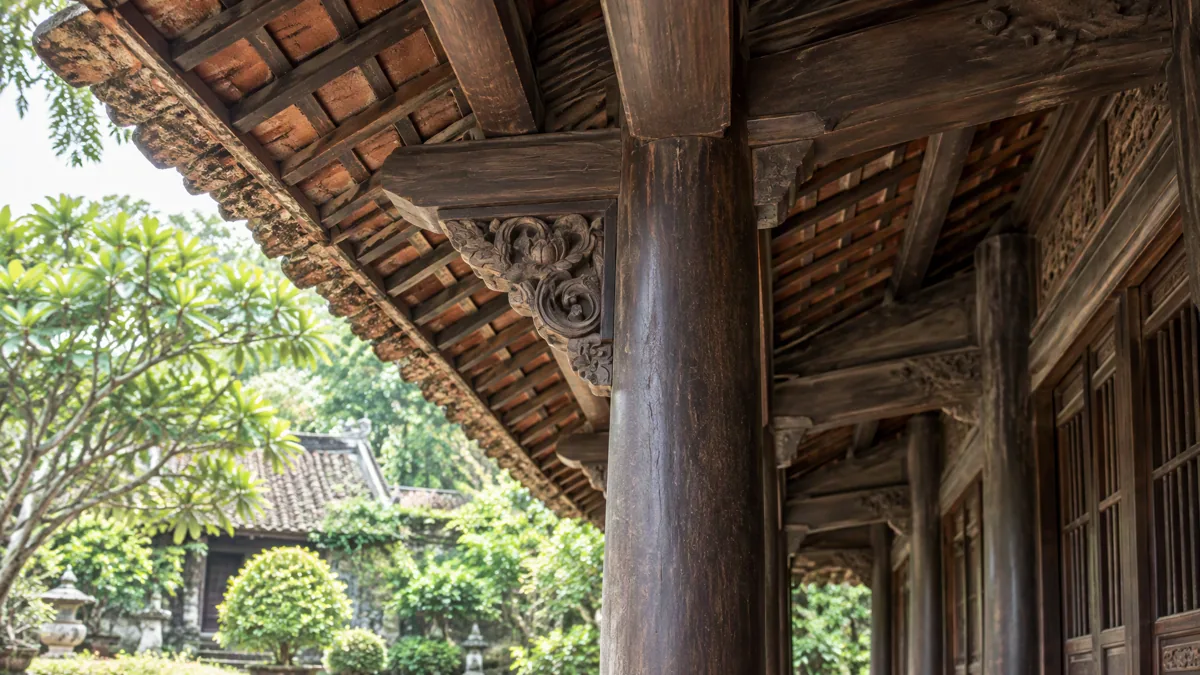
An Hien is a useful first choice because it brings several characteristic features together in one visit. Located on Nguyen Phuc Nguyen Street near the Perfume River, it fits naturally into a cultural outing around the Kim Long area and Thien Mu Pagoda.
Both Hue Discovery and the hotel operator Azerai describe the estate's origins in the late nineteenth century. That background is enough to set the scene; an engaging visit should also explore the house's layout and changing family associations rather than becoming a recital of dates.
Published visitor information is inconsistent, including opening hours, entrance prices and even the street number. Confirm the exact arrival point, current access and admission arrangements with your organiser before departure. A historic attraction listing is not a live booking confirmation.
For enthusiasts, other possibilities include Tha Om and Ngoc Son Princess Temple Garden House. Azerai publishes a half-day experience linking these with An Hien, demonstrating that a dedicated garden-house outing is an established local option. It does not mean every property is automatically accessible on your chosen date, or that another operator includes the same hospitality.
Choose one of two approaches: a single garden house with a nearby cultural landmark, or a specialist architecture outing visiting more than one residence. The first gives variety; the second rewards travellers who enjoy comparing layouts and hearing detailed explanations.
| Part of the outing | Suggested focus | What to confirm |
|---|---|---|
| First visit | An Hien's approach, garden and timber house | Access, admission and guiding arrangements |
| Second stop | Thien Mu Pagoda, or another confirmed garden house | Opening conditions and transfer time |
| Final pause | A relaxed meal or refreshments | Venue, dietary needs and whether included |
For the mixed route, begin with the garden house while you still have energy for close observation. Continue to Thien Mu only if the weather and your walking tolerance allow. Finish with lunch or a refreshment break rather than adding several royal tombs just because they appear nearby on a map.
For the architecture route, ask the guide to compare two properties instead of repeating the same explanation at each. One might illuminate family history; another might make garden design easier to understand. Let confirmed access determine the order.
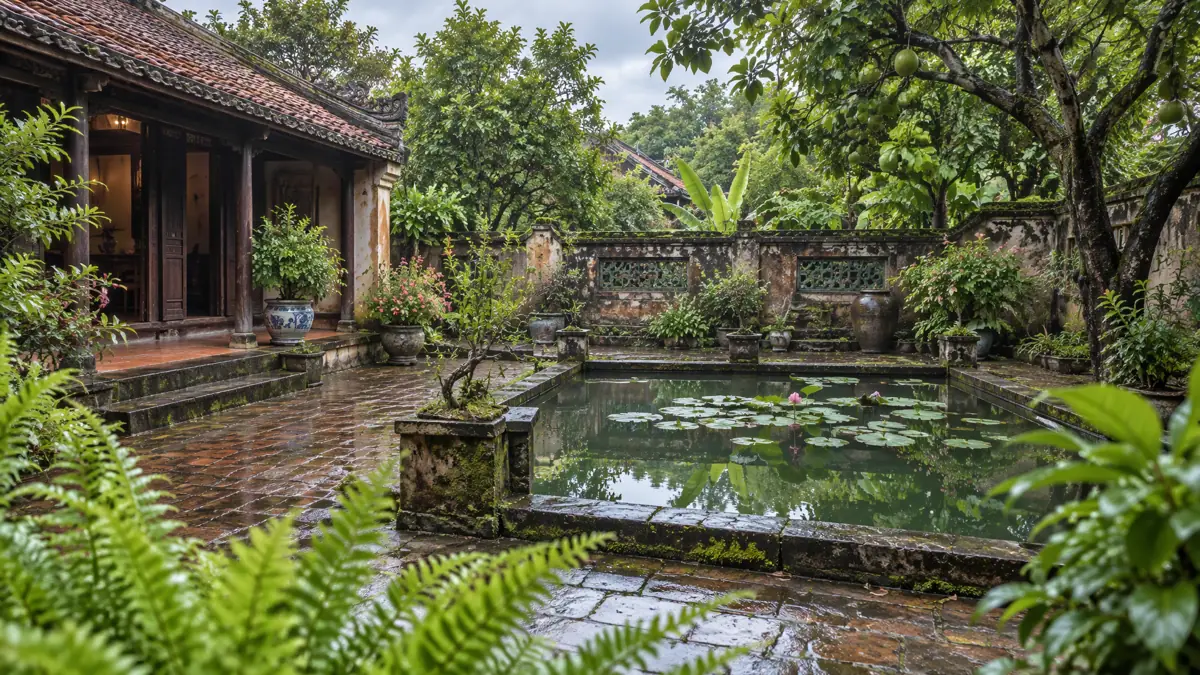
Vietnam's national tourism climate guide describes Hue's September-to-February period as rainy and cloudy, with cooler conditions. A garden-house visit involves outdoor approaches as well as covered spaces, so it is not an entirely indoor rainy-day activity.
Check the short-range forecast and local advice. During heavy rain or flooding, postpone the outing or change the plan rather than assuming a tiled veranda makes access safe. In warmer conditions, carry water, use sun protection and build in a break. Neither orchard shade nor an old house guarantees cool temperatures.
A private car can simplify transfers and provide a fallback when conditions change. Walking between sites may look appealing, but pavements, crossings and heat can make the experience less gentle than expected. Request actual walking distances and step information if anyone has mobility concerns.
Follow the host or guide's instructions about shoes, restricted rooms and photography. Dress respectfully, speak quietly around worship areas and ask before photographing residents. Do not move furniture, lean against carved timber or enter a room simply because its door is open.
Photographers should favour available light and architectural details over staged disruption. Check whether tripods or commercial shoots need permission. A paid entrance does not automatically grant permission for every kind of image-making.
Send your organiser the interests that matter most: architecture, gardens, family history or a quieter introduction to Hue. Then request a clear description of what is actually arranged.
This experience pairs well with a separate Imperial City visit because it adds domestic scale to the city's monumental history. Keep the DMZ for a dedicated history day if it interests you; squeezing everything together undermines the slower rhythm that makes garden houses worthwhile.
Reserve a half-day for a relaxed outing with transfers and another cultural stop. The time inside each property depends on access, your interests and the guide's explanation, not a universal fixed duration.
No. An Hien is a historic garden-house estate, while the Imperial City is a much larger royal complex. They provide different perspectives and can complement one another on separate visits.
Ask about current independent admission before arriving. A guide is valuable for understanding timber construction, worship spaces and family history that may not be obvious from simply walking through.
No. Hospitality and performances depend on the property and the booked programme. Request written confirmation of any tea service, music, meal or host interaction you want included.
It can suit children who enjoy gardens and small discoveries. Keep the visit short, supervise them near water and fragile features, and avoid assuming there are playgrounds or child-focused activities.
Do not assume step-free access. Ask about gates, paths, thresholds, toilets and vehicle drop-off at each property. Specific access information matters more than a general description of the outing as gentle.
The best garden-house visit is not the one with the longest list of addresses. It is the one that leaves you understanding how a doorway, a timber frame and a patch of greenery belong together. Choose confirmed access, thoughtful guiding and a pace that allows those details to register.
👉 Contact C Vietnam Tours to plan your Hue garden-house experience
👉 Or browse our Vietnam tour packages to connect Hue with your wider journey.

Vietnam Classic 7 Days Tour – Best Highlights from North to South
Danang Beach Break 4 Days | Relaxing Da Nang Beach Holiday Tour
Best A Luoi Tour Package from Hue – Authentic Highland Experience