Plan Bat Trang team building in Hanoi with a pottery workshop, practical group booking checks, cultural etiquette and clear souvenir collection arrangements.
A shared lump of clay can start a better conversation than another presentation slide.
For an incentive trip with a hands-on cultural chapter, explore our Vietnam corporate and incentive planning guide or build the experience into a wider Vietnam tour itinerary. The craft heritage of Bat Trang pottery village provides the setting; the practical success depends on the workshop you book.
Bat Trang team building works best as a cultural workshop, not a promise that pottery will transform your organisation. Colleagues learn something unfamiliar together, exchange ideas and leave with a better understanding of a Vietnamese craft. There is room for conversation without asking everyone to race, perform on stage or win.
For an international group based in Hanoi, this can be a useful change of pace after meetings. However, a public pottery class is not automatically suitable for a corporate event. Teaching capacity, seating, ventilation, language support and the timing of finished pieces all need checking before the activity goes into your programme.
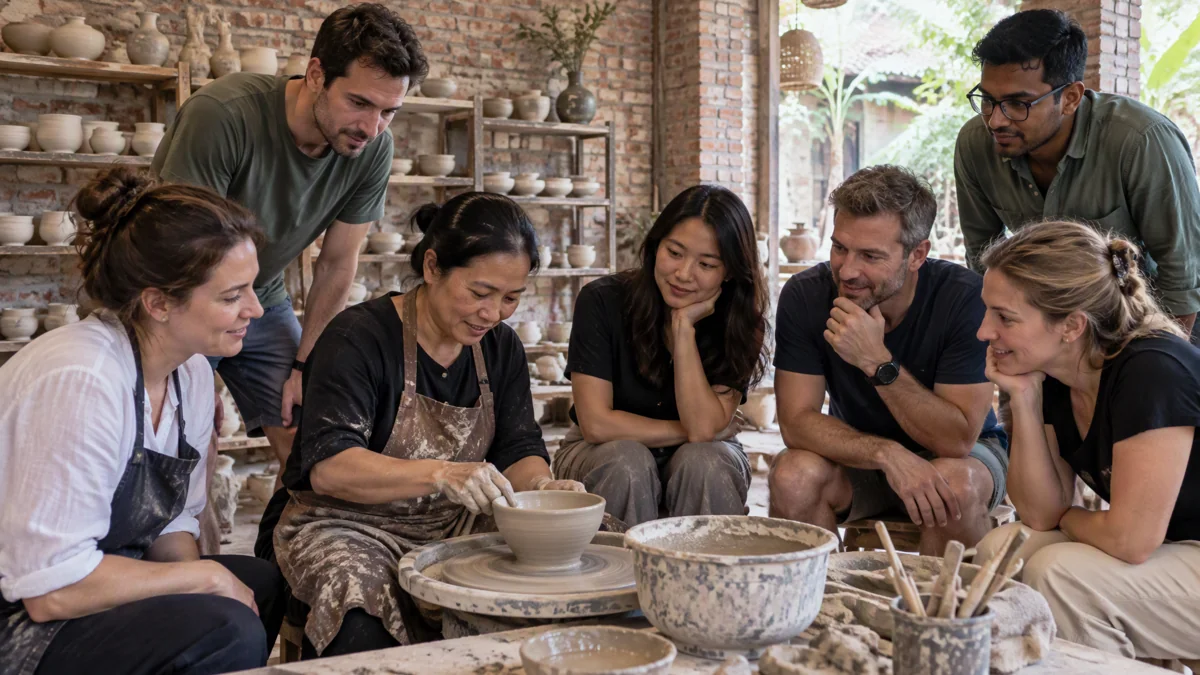
Vietnam's national tourism authority describes Bat Trang as a longstanding pottery village on the Red River, roughly 14 kilometres from central Hanoi. Its visitor guide highlights workshops, a ceramics market and a pottery museum. Together, these offer context beyond the clay session itself.
For a group with a free afternoon, a village visit can combine observing craftsmanship with trying a technique. Arrange workshop access in advance: a production space is a workplace, and visitors should not assume they can enter, photograph staff or approach kilns without permission. Allow time for the road transfer rather than treating distance as a guaranteed journey duration.
Some Bat Trang artisans also teach in the city. For example, Authentic Bat Trang currently advertises a three-hour wheel-based class in Hanoi's Old Quarter. This demonstrates that you do not have to travel to the village to try the craft, but it is a different experience from visiting its workshops and lanes.
For a meeting-heavy itinerary, a central studio may reduce transport demands. Confirm the actual workshop address, private-session availability and accessible entrance. A listing for individual travellers does not establish how many corporate participants a venue can teach comfortably.
Start with the desired atmosphere. An incentive group may want relaxed discovery; a project team may prefer a light collaborative exercise. Neither needs an elaborate scoring system.
Ask participants to make a small object with a useful purpose: a bowl, a dish or another shape approved by the instructor. Keep expectations realistic. Wheel throwing takes practice, and an uneven result can still be satisfying. Allow people to restart without turning mistakes into public entertainment.
For a collaborative element, invite pairs to discuss a simple design theme before making their own pieces. An optional closing conversation can ask what they learned from watching the artisan. Avoid claims that the exercise measures leadership, personality or professional ability.
Offer another way to participate, such as a suitable hand-building or painting activity, if the supplier provides it. Ask about seating and adaptations beforehand rather than assuming every guest can use a wheel or tolerate a long seated session.
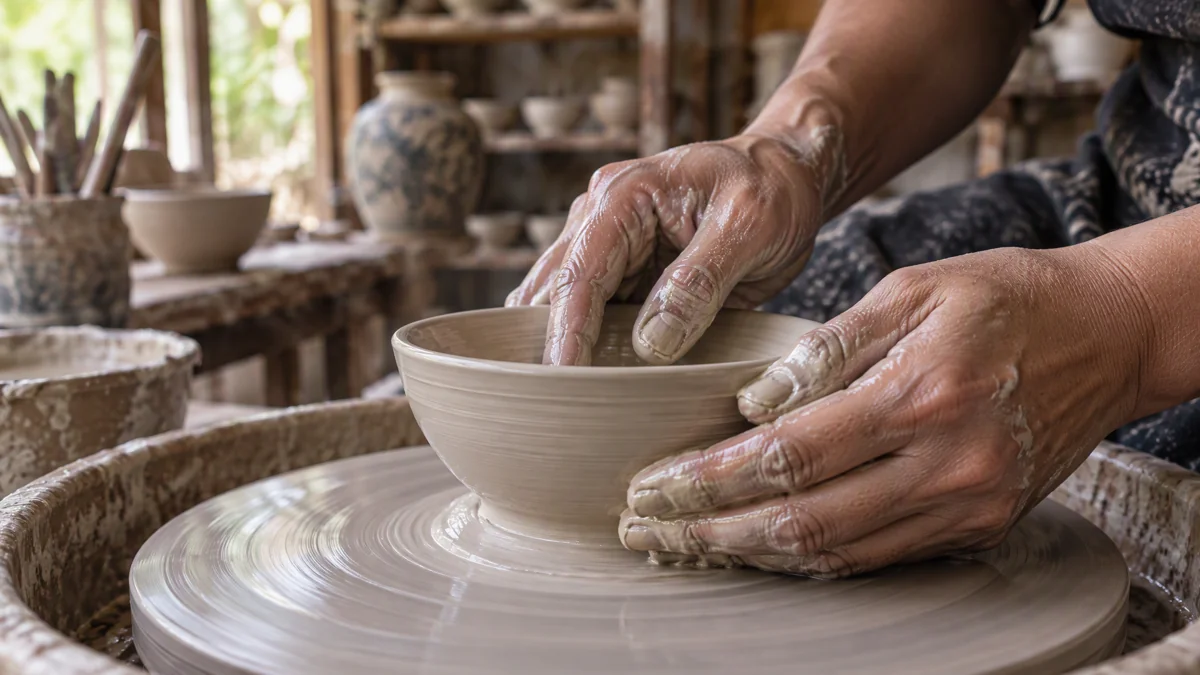
The following structure is a planning example. The supplier should set the practical teaching sequence and timings after reviewing your group.
| Programme phase | What to arrange |
|---|---|
| Arrival and welcome | Toilets, water, aprons and a clear explanation of the activity |
| Craft introduction | An artisan demonstration with interpretation where needed |
| Hands-on session | Adequate equipment, instructor support and freedom to restart |
| Short break | A comfortable place to rest away from working equipment |
| Finish and reflect | Identify pieces, record finishing choices and explain collection |
If you add a market walk or museum visit, protect the workshop time rather than squeezing everything into a short slot. Check current access and opening arrangements separately. Keep shopping optional, with a clear meeting point and departure time.
Request a written proposal based on your dates, headcount and language needs. It should identify the venue and state whether your session is private or shared. Ask how many instructors and usable workstations will be provided, and whether participants will take turns.
Check these details before confirming:
For larger groups, staggered sessions may be more practical than placing everyone in one room. That is a proposal to discuss, not a capacity claim. Confirm whether the waiting group has a worthwhile activity and whether the split creates extra transport or staffing costs.

A freshly shaped piece is not a finished ceramic souvenir. Drying, glazing, firing and cooling require additional time. Authentic Bat Trang's current class page describes several finishing options and generally mentions a wait of a few days. Those terms apply to that provider's advertised class, not every village workshop or group booking.
Schedule the session early in your Hanoi stay if collecting pieces matters. Obtain a specific collection estimate, then confirm whether it fits your onward travel. Do not promise a finished personalised gift at the farewell dinner unless the supplier has agreed to deliver it in time.
Use a simple identification system for each participant and photograph the pieces before leaving. Confirm packing, delivery charges and what happens if an item cracks during firing. International shipping, where offered, needs a separate quote and destination checks; it should never be treated as automatically included.
The artisan is a teacher, not a backdrop. Introduce the group, ask before photographing people and follow instructions around tools and equipment. Do not request access to production areas simply to obtain better event photographs.
Wear washable clothing and suitable footwear. Avoid a dress code that makes participants worry about clay splashes. Check allergies or sensitivities with the provider, and keep food separate from working surfaces.
Hanoi's seasonal weather can affect transfers and comfort. National tourism guidance describes generally cooler autumn conditions and hotter, wetter summers, but that is not a forecast for your date. Check local conditions and the venue's indoor arrangements shortly before travel.
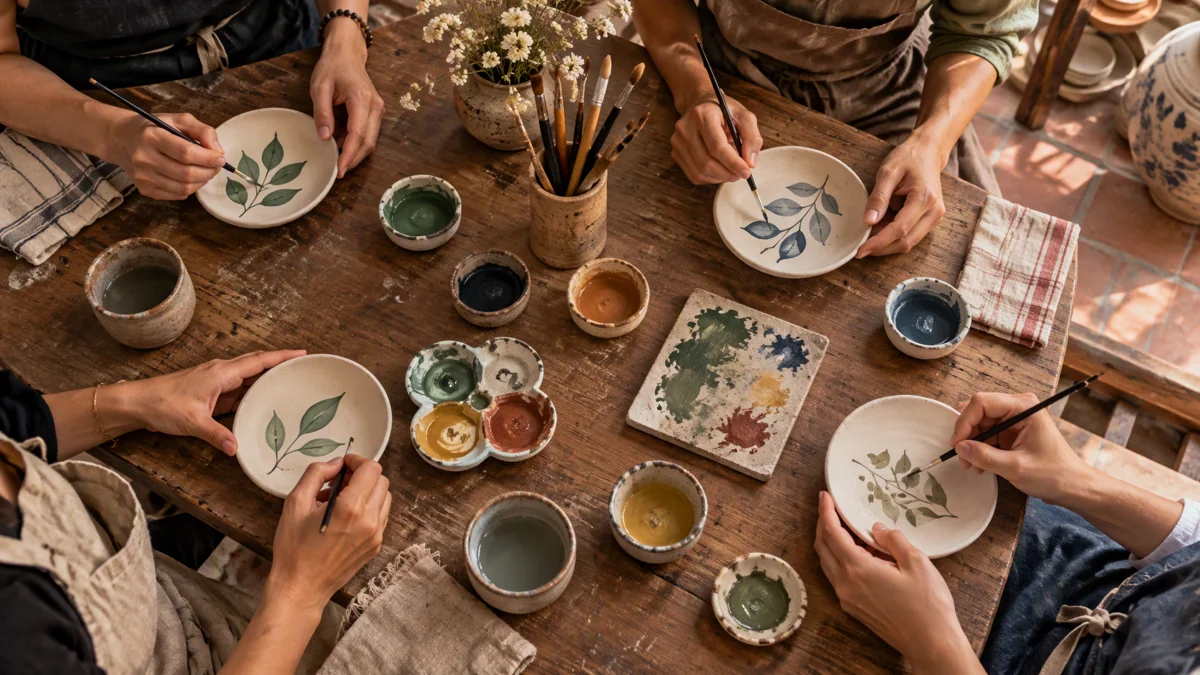
The strongest Bat Trang team building programme is usually the simplest: a suitable workshop, enough teaching time and clear expectations about the finished piece. Add village exploration when the schedule allows; choose a city studio when convenience matters more. Either way, leave room for genuine curiosity rather than filling every minute with corporate instructions.
Beginner classes are available. Confirm the selected technique and teaching support for your group, especially if guests have never used a pottery wheel.
No. Hanoi also has studios teaching Bat Trang pottery techniques. Choose the village for wider craft context or a central venue for a tighter programme.
That requires direct confirmation. Ask about workstations, instructors, private use and staggered sessions rather than assuming an individual class can scale up.
Do not assume so. Fired and glazed pieces usually require additional processing time. Agree collection or delivery arrangements before booking.
An indoor studio can be useful, but transfers and venue access still matter. Confirm the weather contingency and avoid guaranteeing uninterrupted operation.
Share dates, headcount, hotel location, available time, languages, accessibility needs and whether finished pieces must reach guests before departure.
👉 Contact C Vietnam Tours to plan your Hanoi corporate craft experience
👉 Or browse our Vietnam tour packages to combine meetings with cultural discovery.


Highlights of Vietnam from North to South 12 days



Private Mekong Delta Day Trip – Cai Be & Tan Phong Island from Ho Chi Minh City
Vietnam Highlights 8 Days – Culture, Nature & Heritage Journey



Northeast Vietnam Discovery 5 Days: A Journey Through Heritage & Ethnic Traditions