Plan your Bai Tu Long cruise itinerary with overnight options, kayaking tips, cabin advice, seasonal guidance and booking checks for a smoother Vietnam trip.
“Choose the rhythm of your cruise, not just the view from your cabin.”
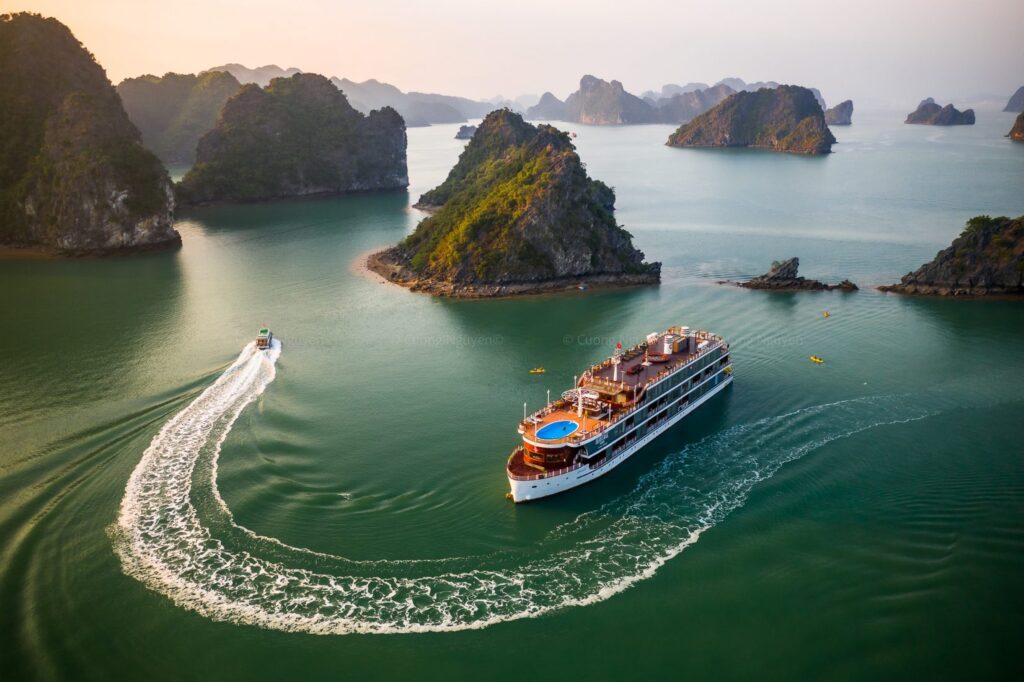
Start with C Vietnam Tours’ Bai Tu Long Bay cruise options, or explore Vietnam tour packages to connect your sailing with Hanoi and other destinations. For geographical context, Bai Tu Long Bay lies northeast of Ha Long Bay, within northern Vietnam’s dramatic limestone seascape.
Would you rather spend your afternoon paddling beneath limestone cliffs, visiting a cave, or watching the islands pass from a comfortable deck chair? That question matters more than a ship’s star rating. A thoughtfully chosen Bai Tu Long cruise itinerary balances scenery, activities and genuine downtime without making your holiday feel like a race between attractions.
Bai Tu Long is often marketed as a quieter alternative to the best-known Ha Long routes. However, quieter does not mean empty, and a beautiful cabin does not guarantee your preferred excursions. Use the following booking checkpoints to choose the right sailing, understand a realistic overnight schedule and keep your wider Vietnam journey comfortable.
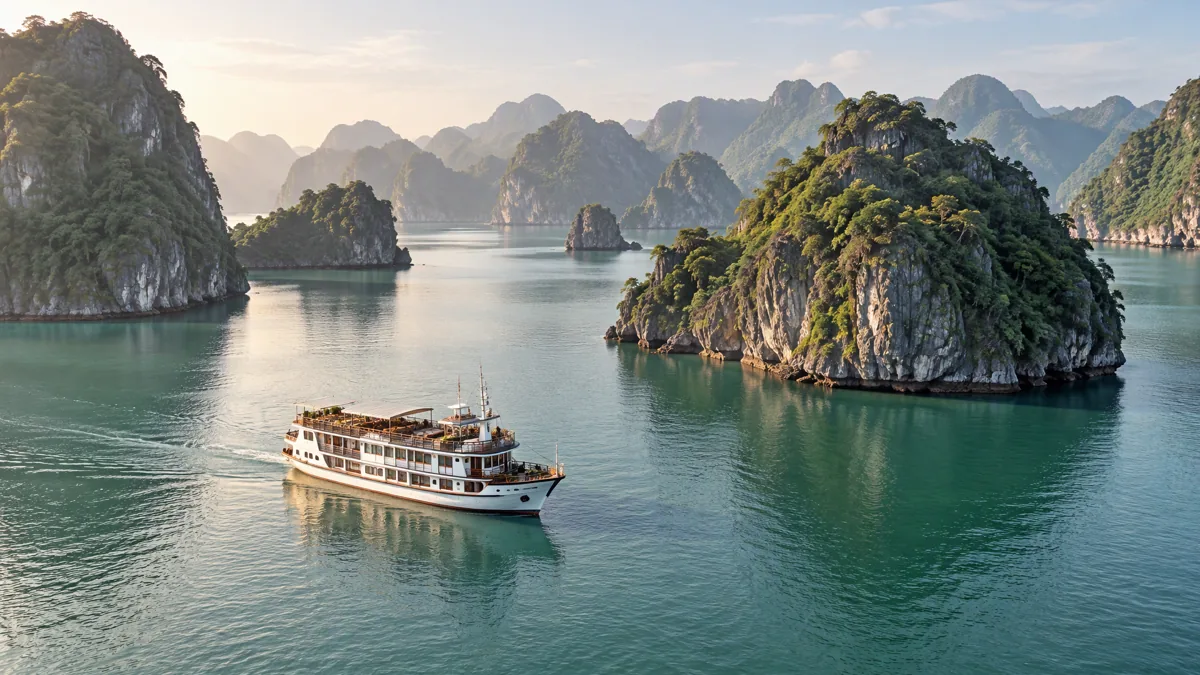
Cruises advertised under the broad “Halong Bay” label may sail different neighbouring bays. Ask for the actual itinerary, embarkation terminal and ship name, not only the destination heading on a booking page.
Some Bai Tu Long programmes include areas such as Cong Dam or Cong Do and a visit to Thien Canh Son Cave. Others may offer a floating-village excursion. These stops are not interchangeable, and you should not assume every short cruise includes all of them.
Before paying a deposit, request answers to three questions:
Treat the confirmed programme as a planning outline, not an unconditional promise. Weather, tides and operating permissions can change the route.
A two-day, one-night sailing usually offers an afternoon on the water, an overnight anchorage and a morning excursion before returning to port. It is a practical choice when your Vietnam itinerary already includes several destinations.
Two nights make more sense if the cruise is a holiday highlight rather than a quick addition. The extra day can create room for longer excursions and unhurried meals, although the exact benefit depends on the operator’s schedule. Ask what changes beyond the additional night in your cabin.
A useful rule: choose one night for a first taste of bay cruising; consider two nights if you value slow mornings, photography or more time outdoors. Either way, count transfers and check-out time when judging how much usable holiday time you are buying.
The schedule below illustrates a common pattern, not a guaranteed C Vietnam Tours departure. Your final timings and stops should come from your confirmed booking.
Expect a morning road transfer, with boarding often around midday. Confirm whether hotel pickup covers your address and whether your transfer is shared or private. Have breakfast before leaving, keep your passport accessible and pack an overnight bag separately from larger luggage.
If travelling with children or anyone sensitive to motion, ask about rest stops and seating arrangements. Avoid planning an ambitious Hanoi sightseeing session before pickup.
After boarding, allow time for the safety briefing, cabin check-in and lunch. Afternoon kayaking or sightseeing brings you closer to the limestone landscape, while cruising between stops provides plenty to watch from the deck.
For kayaking, wear the supplied life jacket correctly, follow the guide’s boundaries and protect your phone with a waterproof pouch. You do not need to turn the session into an endurance challenge. Tell the crew if you would prefer a gentler pace or to remain aboard.

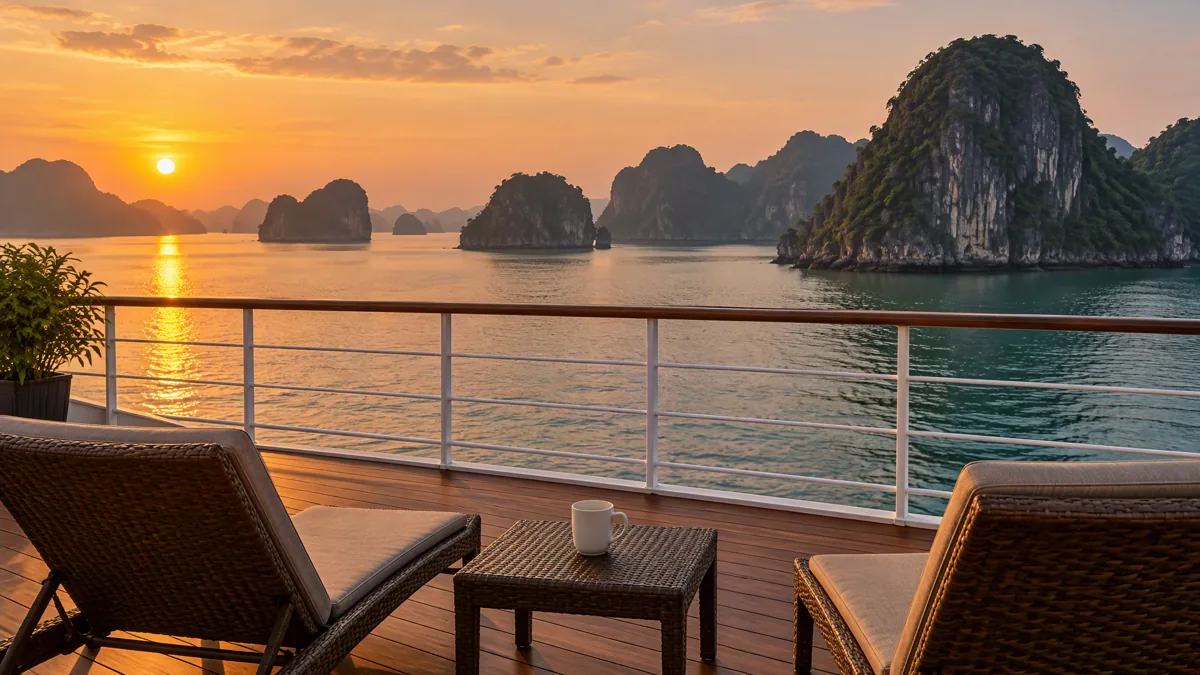
Sunset viewing, dinner and optional onboard activities often fill the evening. Check whether cooking demonstrations or squid fishing are offered, but leave space simply to enjoy the setting.
The following morning may include breakfast and a cave or another sightseeing stop before cabin check-out. Keep essentials with you afterwards. A final meal is commonly served during the return sailing, followed by disembarkation and the road transfer. Do not interpret “two days” as two full days afloat.
Balconies are attractive, but practical details can matter more. Confirm bed configuration, bathroom privacy, air conditioning and where the cabin sits relative to engines or shared spaces. Ask about stair access before booking if mobility is a concern.
For families, clarify child occupancy rules, extra beds and balcony supervision. Couples seeking a quiet escape should ask about cabin location rather than relying on romantic photographs. Solo travellers should confirm any single-occupancy supplement.
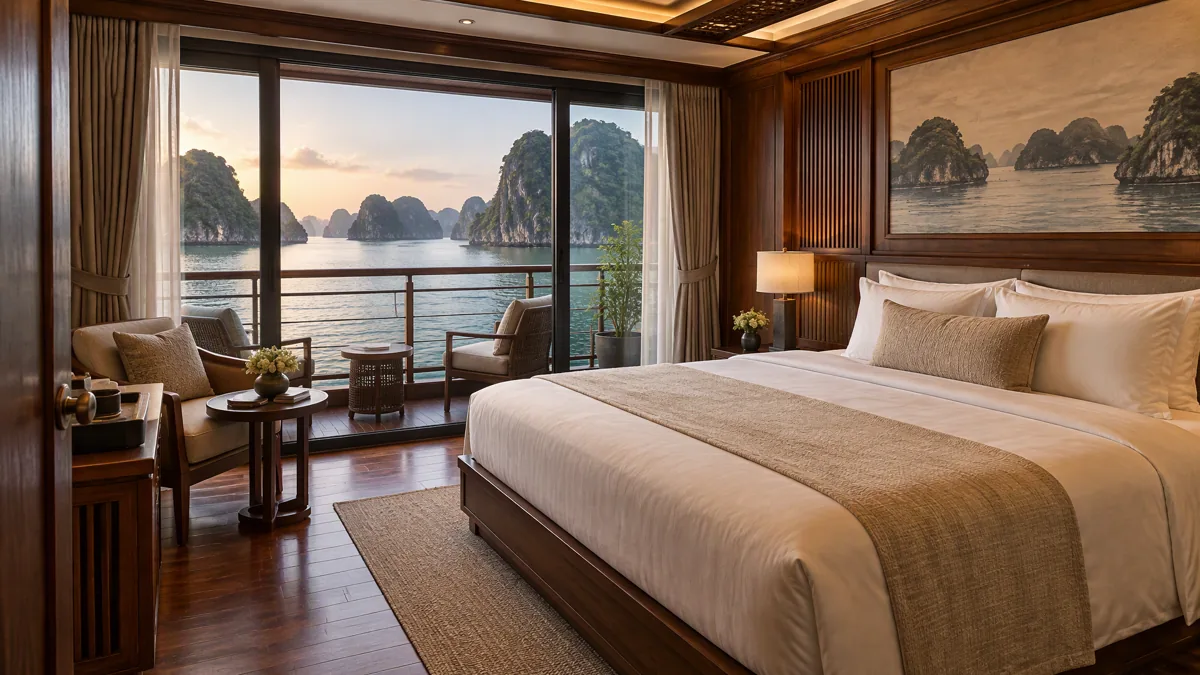
Compare complete trip costs rather than headline prices. Request a written breakdown covering transfers, meals, sightseeing fees, kayaking and any onboard guide services. Then check drinks, spa treatments, gratuities and payment charges separately.
Dietary requirements deserve advance discussion. Mention allergies clearly, including possible seafood cross-contact, and ask what alternatives can realistically be provided. Vegetarians should confirm whether fish sauce or seafood stock can be excluded.
Also read cancellation and weather policies. Ask what happens if sailing is cancelled, shortened or altered, and which costs are refundable. Keep suitable travel insurance and avoid assuming every disruption has the same compensation rules.
The bay shares northern Vietnam’s seasonal weather pattern. Vietnam’s official climate guide describes cooler, mistier conditions in winter and greater storm risk during parts of summer. Autumn often offers comfortable cruising weather, but no month guarantees clear skies or uninterrupted departures.
Bring sun protection, shoes with grip and a light rain layer. In cooler months, add something warm for the deck. Mist can produce atmospheric photographs even when distant views disappear; rough conditions are a safety issue, not merely a photography inconvenience.
Leave a buffer before an international flight or another fixed commitment. Cruise arrival times and road journeys can vary. An overnight stop in Hanoi after sailing is often the less stressful choice.
Stay within approved excursion areas, carry rubbish back aboard and avoid disturbing wildlife. At community stops, ask permission before photographing residents. Buy locally made goods where appropriate without treating homes or workplaces as props.
The best cruise is not necessarily the busiest. A clear route, suitable cabin and realistic transfer plan help you enjoy Bai Tu Long on its own terms, while leaving enough energy for the rest of Vietnam.
No. It is a neighbouring bay to the northeast. Booking labels sometimes use “Halong” broadly, so verify the actual sailing route.
One night works for a short introduction. Two nights can suit travellers wanting more time on the water, provided the longer programme adds worthwhile activities.
No. Cave, kayaking and village visits vary by operator and departure. Check the confirmed programme rather than a general list of bay attractions.
Ask before booking. Remaining aboard may be possible, but alternatives, supervision and activity arrangements depend on the operator.
They can be, with suitable cabins and careful supervision. Confirm child policies, appropriately sized life jackets, meal options and excursion difficulty in advance.
Allow a generous margin and confirm transfers carefully. Staying in Hanoi that night reduces the risk of a delayed return affecting an important flight.
👉 Contact C Vietnam Tours to plan your Bai Tu Long cruise and request a personalised itinerary with clear inclusions
👉 Or browse our Vietnam tour packages for ways to combine your cruise with Hanoi, cultural visits and a longer holiday.
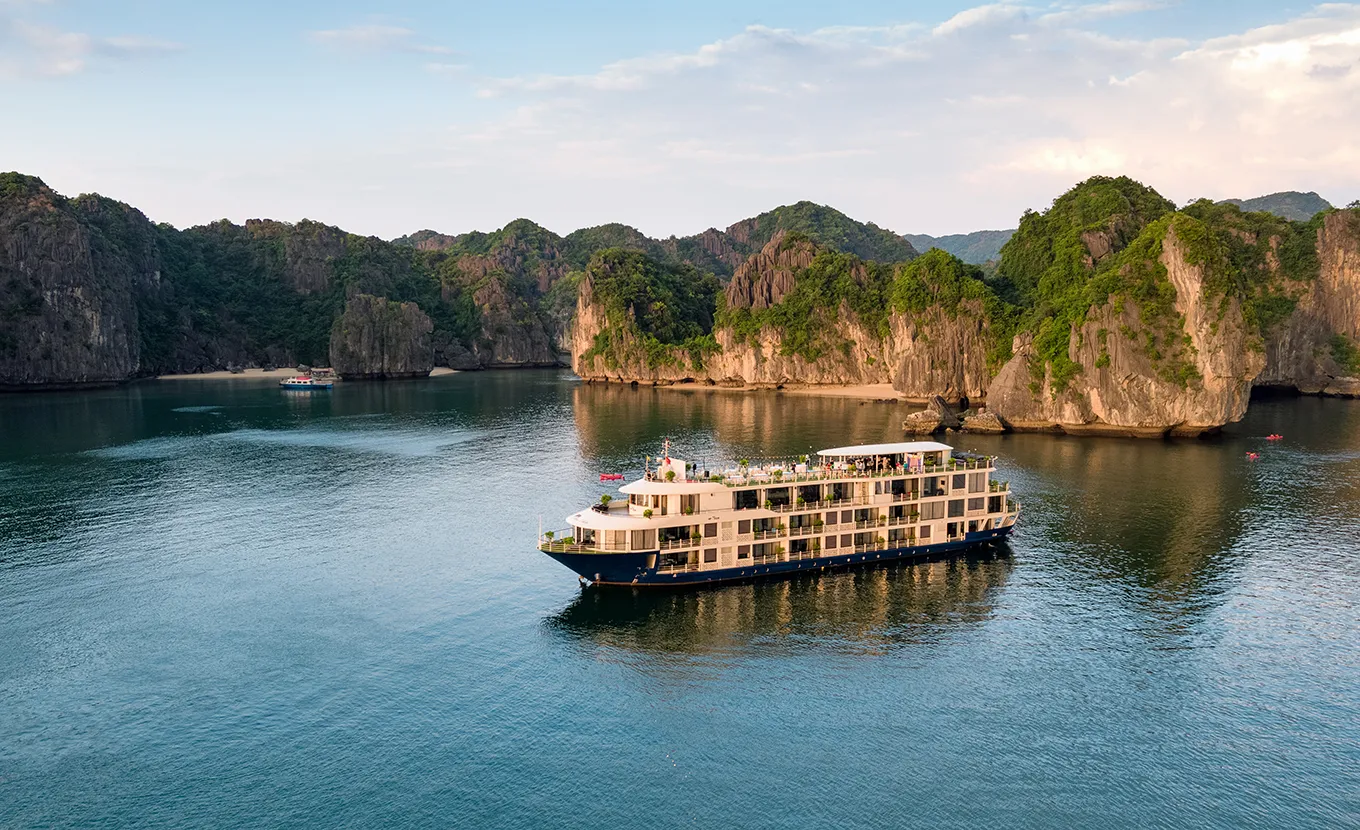
Mon Cheri Cruise 2 Days 1 Night Itinerary: Lan Ha Bay Experience

Vietnam Classic 7 Days Tour – Best Highlights from North to South

Northeast Vietnam Discovery 5 Days: A Journey Through Heritage & Ethnic Traditions
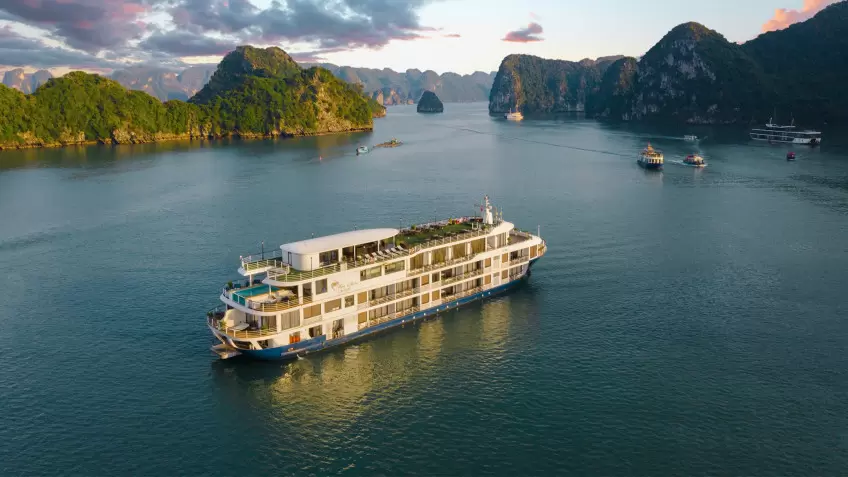


Mon Cheri Cruise 3 Days 2 Nights: A Luxury Journey To Lan Ha Bay